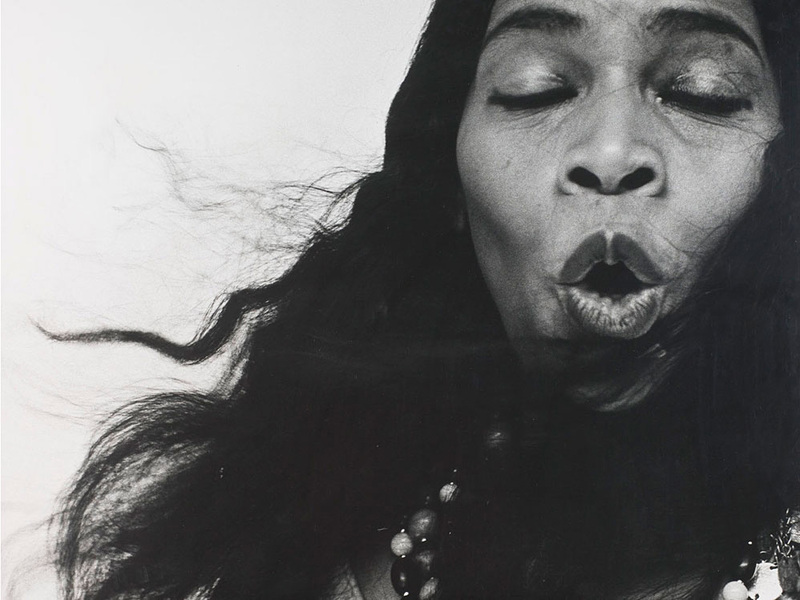
ââånew Perspective Marian Andersons Performance in Picturesã¢ââ American Art Spring 2014
Seventy-v years ago, on Apr ix, 1939, as Hitler'south troops advanced in Europe and the Depression took its toll in the U.Due south., one of the nigh important musical events of the 20th century took identify on the National Mall in Washington. At that place, simply two performers, a singer and a pianist, made musical — and social — history.
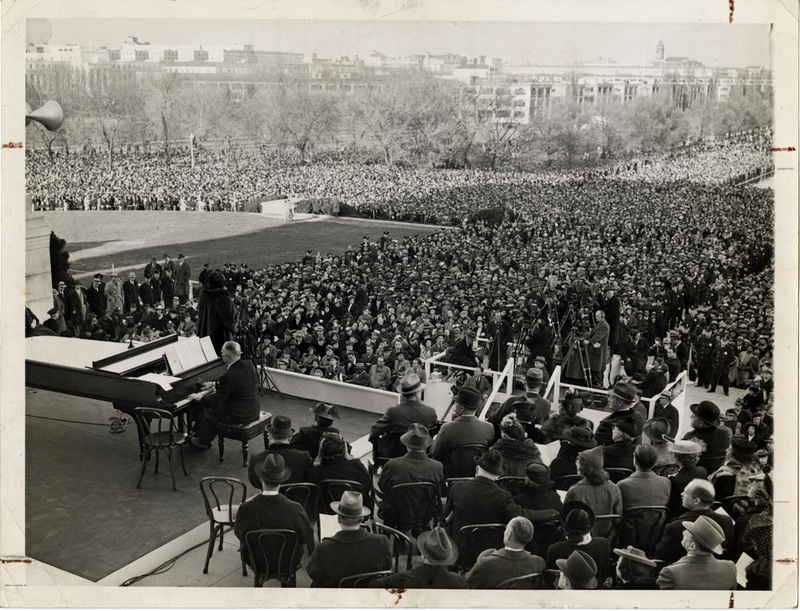
At 42, contralto Marian Anderson was famous in Europe and the U.S., just she had never faced such an enormous crowd. There were 75,000 people in the audience that day, and she was terrified. Later, she wrote: "I could not run away from this situation. If I had annihilation to offer, I would take to practise so now."
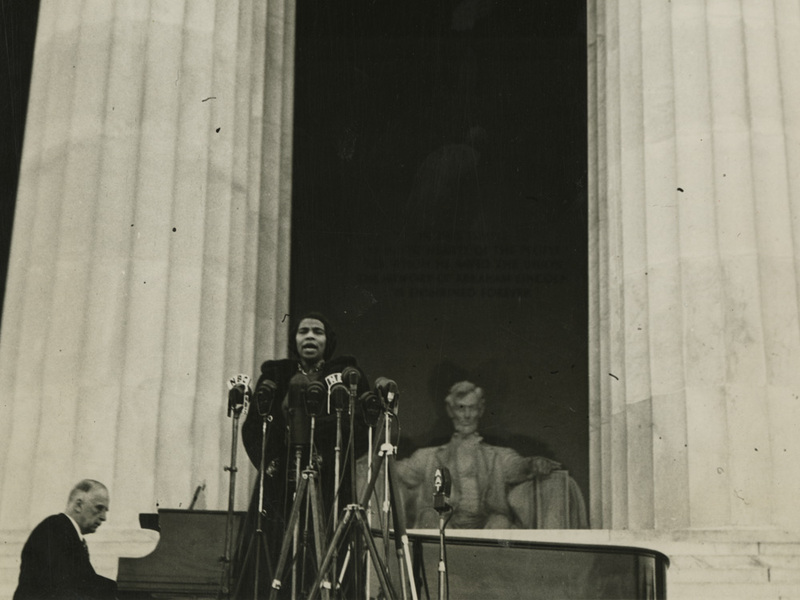
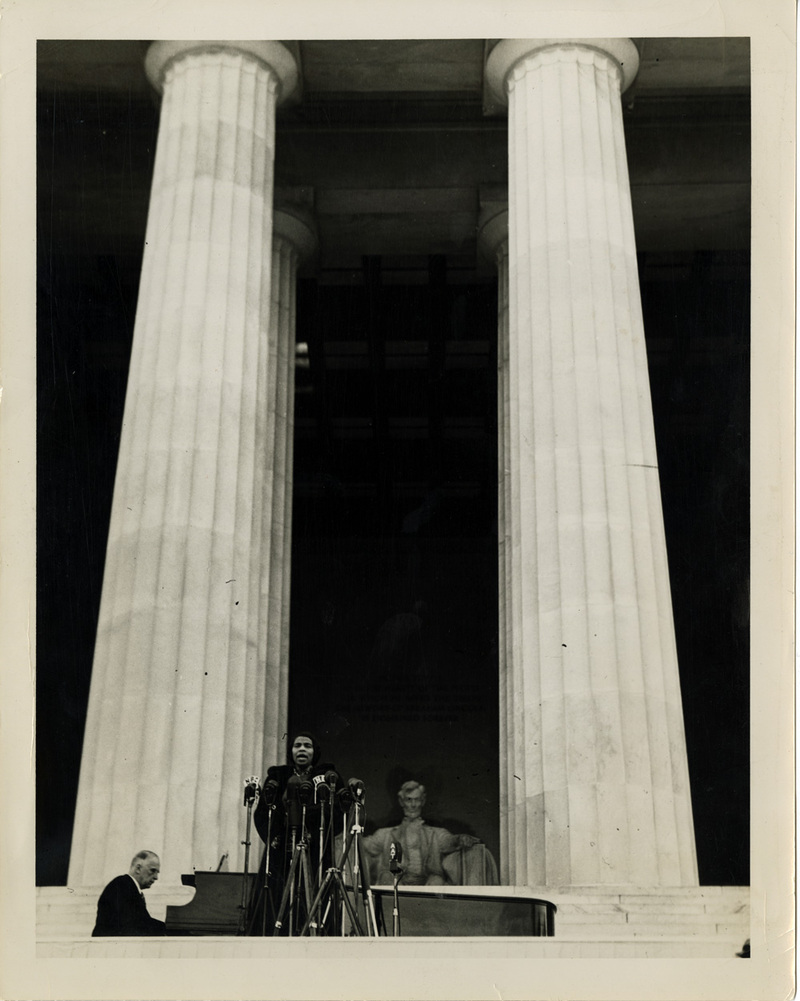
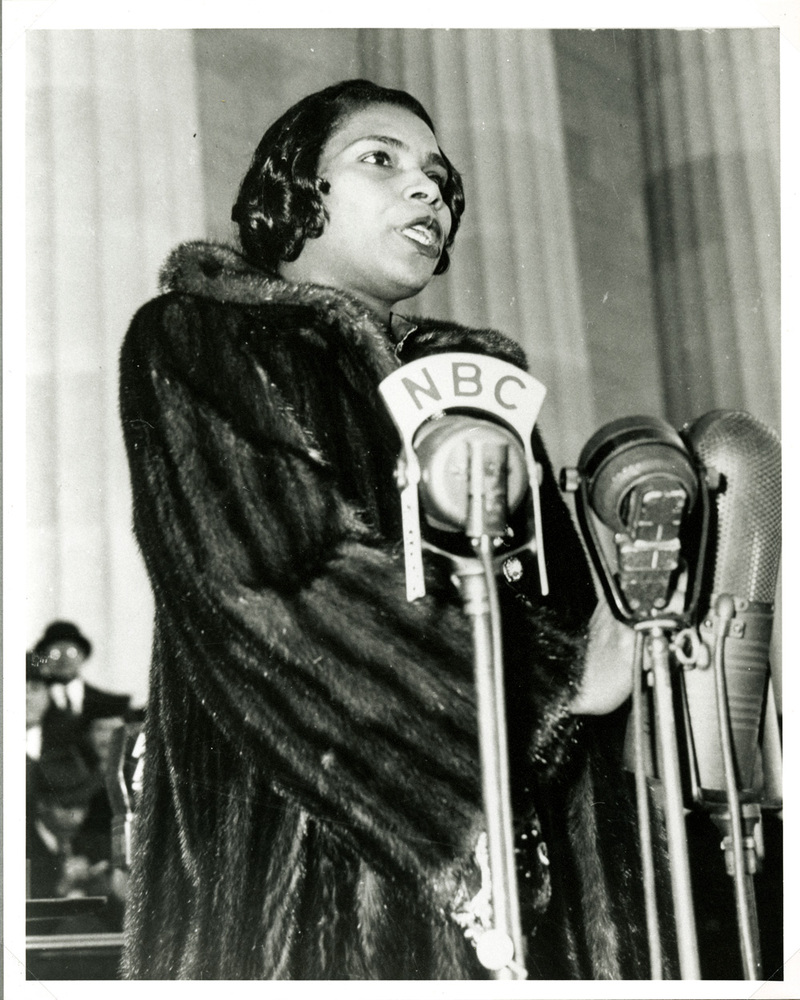
And then, in the chilly April dusk, Anderson stepped onto a stage congenital over the steps of the Lincoln Memorial and began to sing "My State, 'Tis of Thee." Her first notes show no sign of nerves. Her voice is forceful and sweet. And the option of music — that opening vocal — is remarkable, given the circumstances. The NBC Blueish Network announcer explained the unusual venue this way: "Marian Anderson is singing this public concert at the Lincoln Memorial considering she was unable to get an auditorium to adapt the tremendous audience that wishes to hear her."
That was inappreciably the story. According to Anderson biographer Allan Keiler, she was invited to sing in Washington past Howard University as part of its concert series. And because of Anderson's international reputation, the academy needed to observe a place large plenty to accommodate the crowds. Constitution Hall was such a place, but the Daughters of the American Revolution endemic the hall.
"They refused to allow her use of the hall," Keiler says, "because she was blackness and because in that location was a white-artist-only clause printed in every contract issued past the DAR."
Similar the nation's capital, Constitution Hall was segregated then. Black audiences could sit in a small section of the balustrade, and did, when a few black performers appeared in earlier years. But afterwards i such singer refused to perform in a segregated auditorium, the DAR ruled that only whites could appear on their stage.
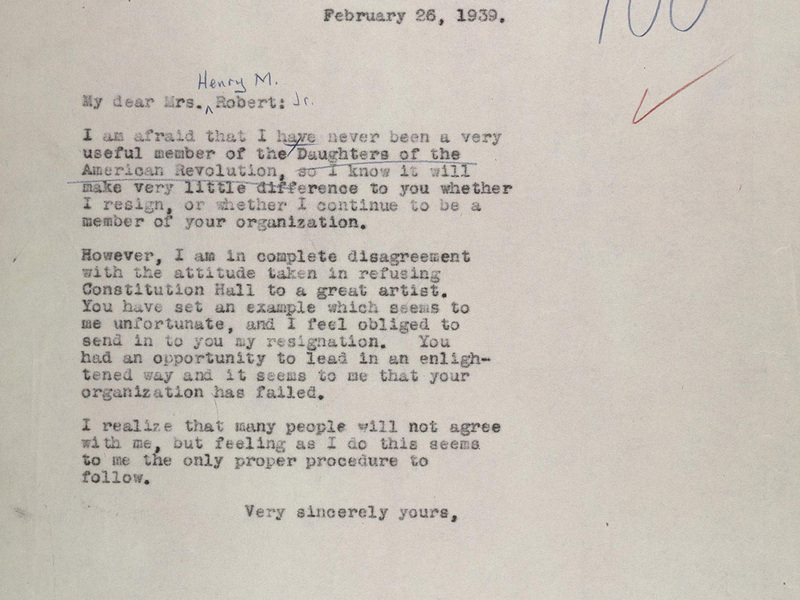
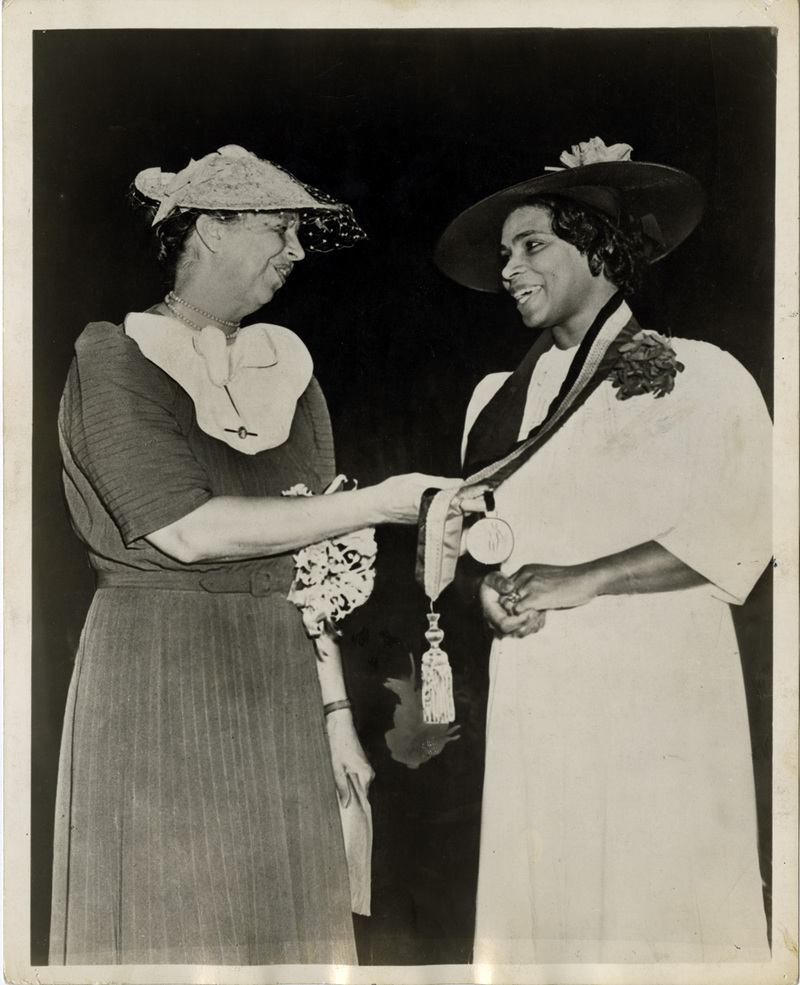
One of the members of the DAR was first lady Eleanor Roosevelt. Outraged past the decision, Roosevelt sent a alphabetic character of resignation and wrote about it in her weekly cavalcade, "My Day." "They have taken an activeness which has been widely criticized in the press," she wrote. "To remain equally a member implies approving of that activeness, and therefore I am resigning."
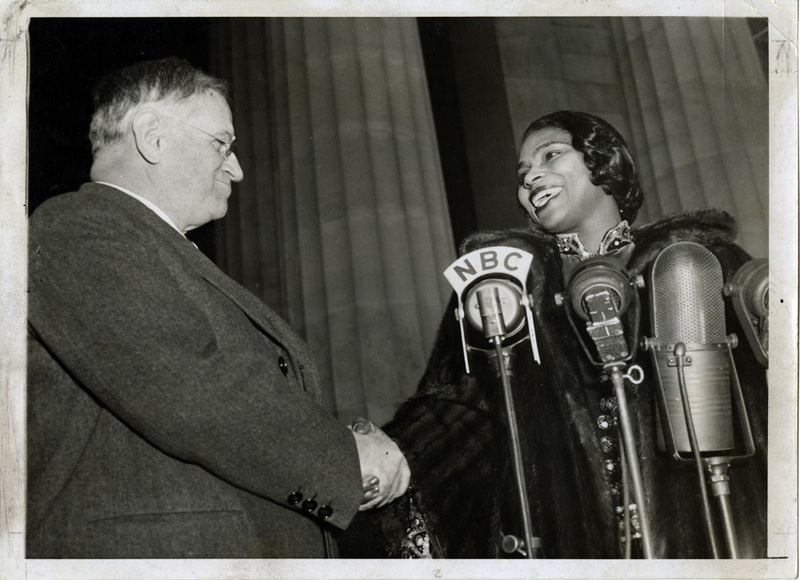
The DAR did not relent. Co-ordinate to Keiler, the idea to sing outdoors came from Walter White, and then executive secretary of the NAACP. Since the Lincoln Memorial was a national monument, the logistics for the day fell to Secretary of the Interior Harold Ickes. It was Ickes who led Anderson onto the stage on April 9, 1939.
'Of Thee We Sing'
She began with "My Country, 'Tis of Thee" — likewise known as "America" — a deeply patriotic song. When she got to the third line of that well-known melody, she made a alter. Instead of "of thee I sing" she sang "to thee nosotros sing."
A quiet, humble person, Anderson often used "we" when speaking almost herself. Years after the concert, she explained why: "We cannot live alone," she said. "And the matter that made this moment possible for yous and for me, has been brought about past many people whom we volition never know."
YouTube
Merely her modify of lyric — from "I" to "we" — can be heard as an comprehend, implying community and group responsibleness. Never a ceremonious rights activist, Anderson believed prejudice would disappear if she performed and behaved with dignity. Just nobility came at a cost throughout her 25-minute Lincoln Memorial concert. Biographer Keller says she appeared frightened before every song, all the same the perfect notes kept coming.
"I think information technology was considering she was able to close her eyes and shut out what she saw in front end of her," Keiler says. "And simply the music took over."
After "America," she sang an aria from La favorite past Gaetano Donizetti, then Franz Schubert's "Ave Maria." She ended the concert with three spirituals, "Gospel Train," "Trampin'" and "My Soul is Anchored in the Lord."
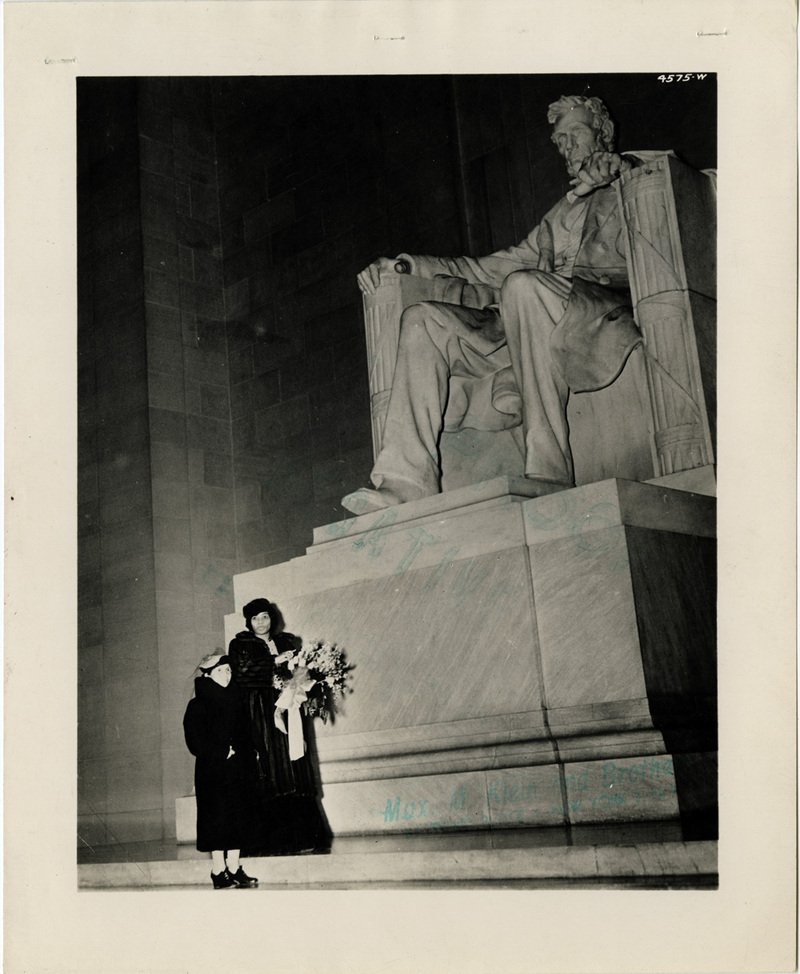
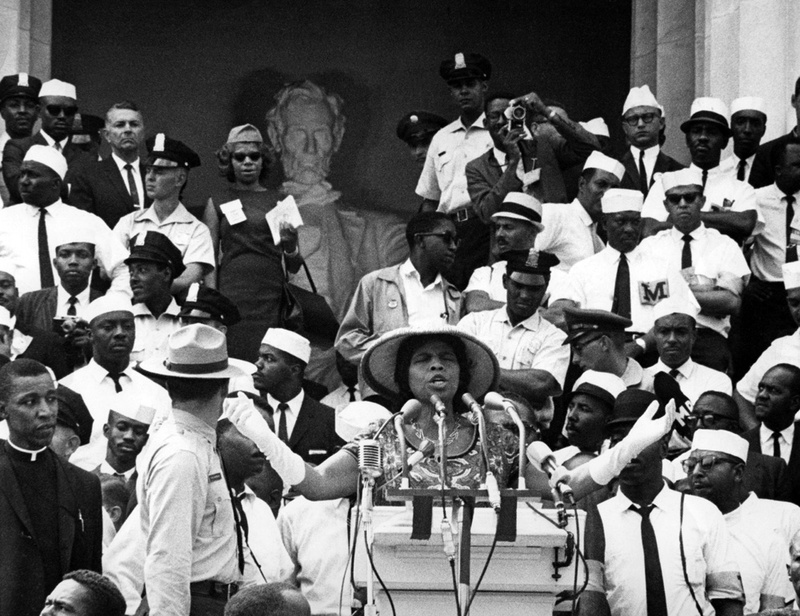
On that stage, before a depository financial institution of microphones, the Lincoln statue looming behind her, iconic photographs reveal Anderson as a regal figure that cloudy, blustery day. Although the sun bankrupt out as she began to sing, she wrapped her fur glaze around her against the April current of air.
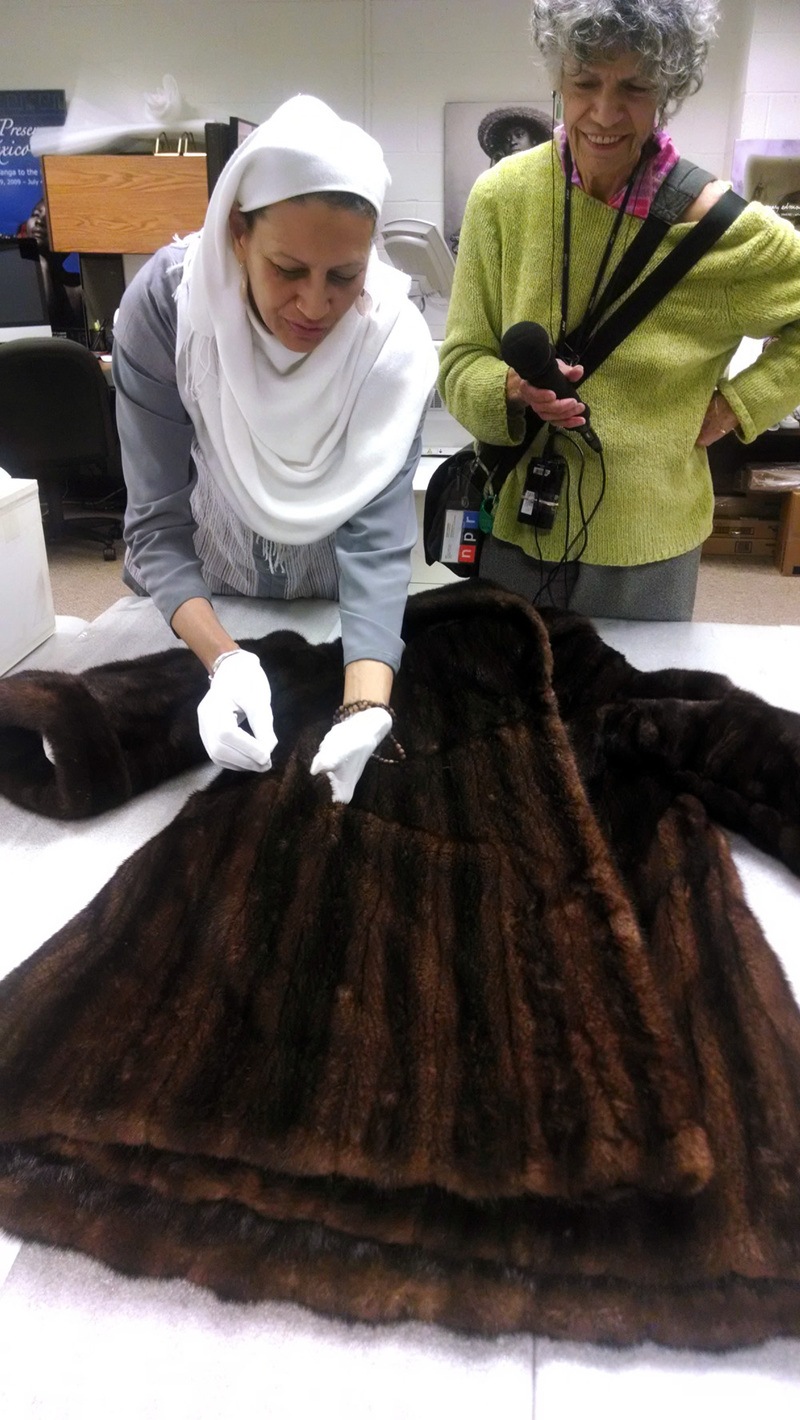
Anderson'south mink coat is preserved at the Anacostia Community Museum in Washington. It's kept in a large archival box in cold storage and blimp with acid-costless tissue to preserve its shape. The lining of the coat is embroidered with aureate threads in a paisley blueprint, and the initials M A are monogrammed inside.
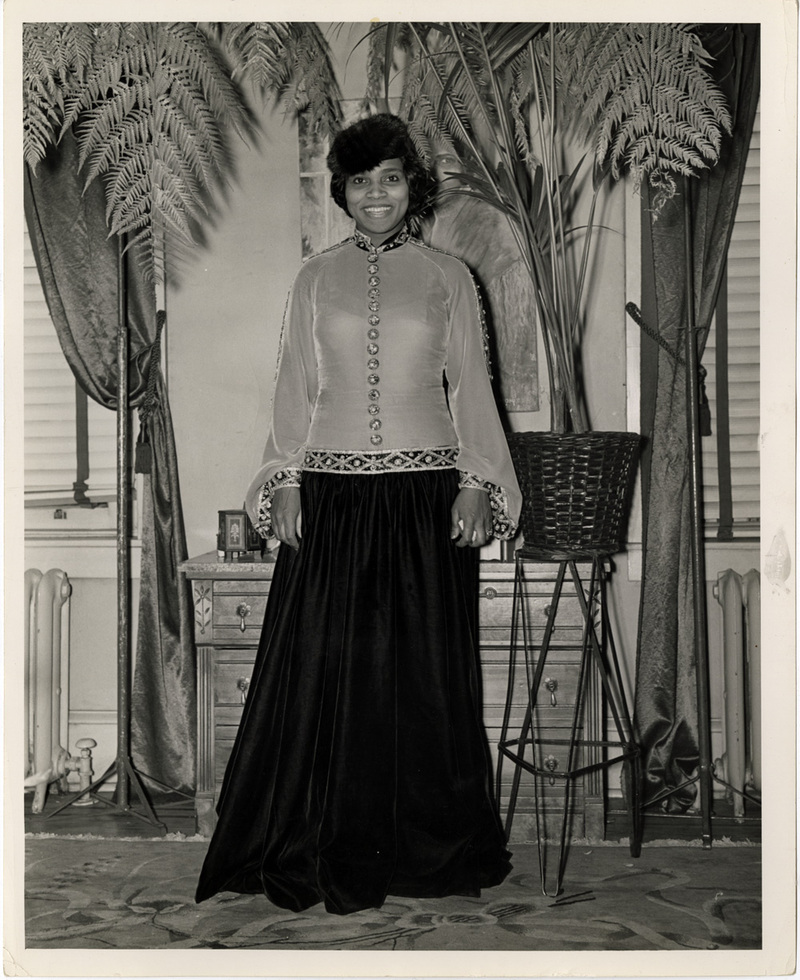
Whether wrapped in that coat or gowned for a concert hall, Anderson, Museum historian Gail Lowe says, touched everyone who heard her: "Her voice was a very rich contralto and so those kind of low notes ... can resonate and match one's heartbeat."
Usher Arturo Toscanini said a voice like Anderson's "comes around in one case in a hundred years."
'Genuis, Like Justice, Is Blind'
When Ickes introduced Anderson, he told the desegregated crowd — which stretched all the fashion from the Lincoln Memorial to the Washington Monument — "In this peachy auditorium nether the sky, all of us are gratis. Genius, like justice, is blind. Genius draws no colour lines."
And genius had touched Marian Anderson.
Anderson inspired generations and continues to do then. An anniversary concert volition have place at Constitution Hall, which denied her 75 years agone. A few featured performers are Jessye Norman, Dionne Warwick, American Idol winner Candice Glover, bass Soloman Howard and soprano Alyson Cambridge.
Cambridge outset heard nearly Anderson while she was a young music educatee in Washington. "They said she was the first African-American to sing at the Met," Cambridge says. At 12 years sometime, Cambridge was merely commencement voice lessons, simply she knew that New York's Metropolitan Opera was it for an opera singer.
These days, Cambridge finds she has to explain the corking vocalizer to others. "Some people sort of look at me with a raised eyebrow — 'Who's Marian Anderson?' " Cambridge says. And she continues, "She really broke downwards the barriers for all African-American artists and performers."
The Lincoln Memorial concert made Anderson an international celebrity. Information technology overshadowed the rest of her long life every bit a performer — she was 96 when she died in 1993. Eventually she did sing at Constitution Hall. By that time, the DAR had apologized and inverse its rules. Anderson rarely spoke of that historic Apr mean solar day, and Keiler says when she did, there was no rancor.
"You never heard in her voice, a single tone of meanness, bitterness, blame, it was only defective," he says. "There is something saintly in that. Something securely human and good."
Source: https://www.npr.org/2014/04/09/298760473/denied-a-stage-she-sang-for-a-nation
0 Response to "ââånew Perspective Marian Andersons Performance in Picturesã¢ââ American Art Spring 2014"
Post a Comment